About the Game

The history behind the first commercially produced multi-level chess game.

An idea that took six years to get right

In 1960, Lynn R. Johnson grew tired of the predictable opening moves of traditional chess and set out to design something different: a three-dimensional version of the game. But early prototypes were far too complicated to actually play.

The breakthrough came in September 1966, when Johnson and his partner Jeff Sullivan Riddick Jr. pulled an all-nighter debugging and rewriting the rules — eventually arriving at the version played today. Three stacked 8×8 boards. Standard chess pieces. Standard movement rules, extended vertically.

They hadn't planned to sell it. The first sets sat in their homes as conversation pieces. Friends who played loved it and wanted their own, so the pair started building sets by hand — until the demand made that unsustainable.
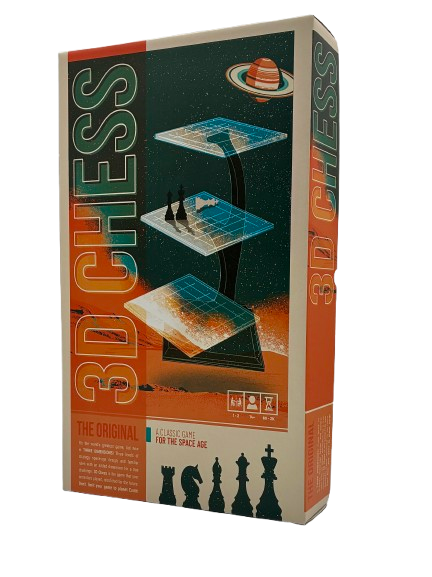
The Original 3D Chess Game packaging

What's in the Box

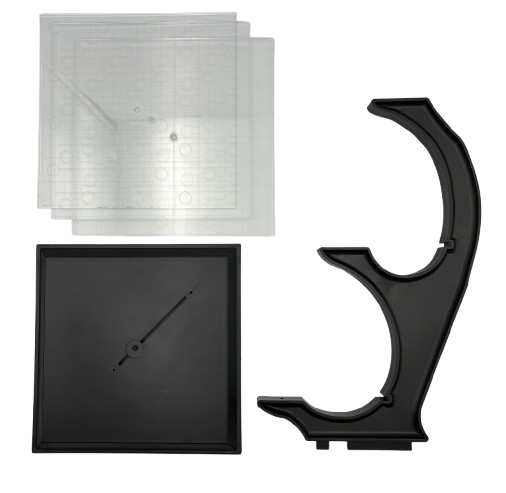
The Original 3D Chess Game — disassembled set The Original 3D Chess Game — in box, no background
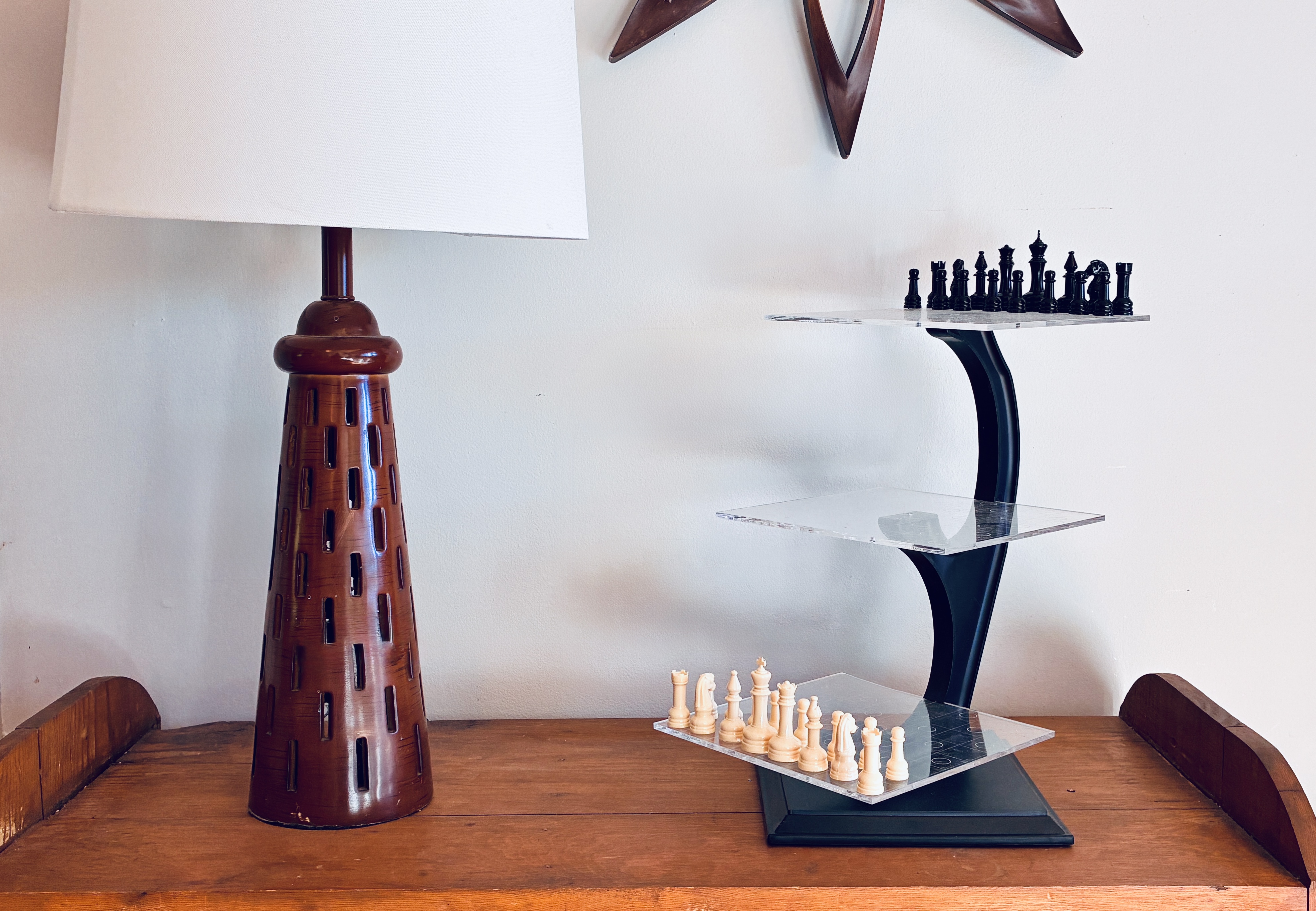
The Original 3D Chess set showing all three levels

From Florida demonstrations to worldwide distribution

After securing copyrights and conducting market research, Johnson and Riddick traveled throughout Florida and New Orleans giving live demonstrations. During the 1967 Christmas season, demand outpaced everything they could supply.

In 1968, the game became commercially available worldwide through Alabe Crafts, Inc. of Cincinnati, Ohio — marking the first time anyone could buy a standardized, playable version of 3D chess off the shelf.

The company was originally founded as 3-D Chess, Inc. in Florida, and later became Dimensional Games, Inc.

What makes this the definitive version

Three-dimensional chess variants have existed since the 19th century — but they were complex, obscure, and unplayable by most people. The 8-level "Stereo Chess" variant required 128 pieces and took hours to complete a single game. Earlier 3D variants invented in Germany in the 1800s required custom pieces and boards almost impossible to obtain.

The key insight: Johnson's version uses three standard 8×8 boards and all the chess pieces you already own. It hits a sweet spot — complex enough to be genuinely three-dimensional, familiar enough to learn in an afternoon.

When it launched commercially in 1968, it was the first version of 3D chess anyone could actually buy. That combination — a playable ruleset, standard equipment, commercial availability — is what established it as the reference version.

Not the Star Trek chess set

Tri-Dimensional Chess from Star Trek was, at its core, a TV prop. The boards were assembled from pieces of 3D Checkers and 3D Tic-Tac-Toe sets available at the time. No rules were ever invented for it within the show — Kirk and Spock were moving pieces on a board that had no official gameplay.

The Original 3D Chess Game predates the Star Trek episodes that made the prop famous. It has complete, tested, official rules developed by its inventors. It has been played seriously and competitively since 1967.

Star Trek made "3D chess" a cultural metaphor for multi-layered thinking. This game is where you actually play it.

What you get

The current production set maintains the same design and rules established in 1966, updated with modern manufacturing:


Buy on Amazon — $74.99

See how it's played

The rules are simpler than you think.

How to Play →